

Currently Empty: ر.ق 0,00


IELTS
How to Choose an English Course Based on Your Level and Learning Goals
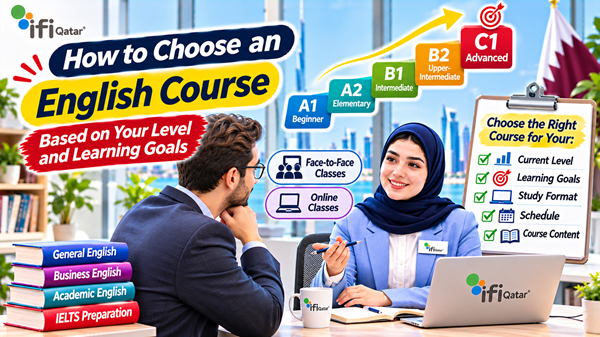
Choosing an English course can be more difficult than it first appears. There are hundreds of learning options available, from beginner classes and general English programmes to advanced courses, business English training and IELTS preparation.
However, the most popular course is not necessarily the right one for you. A programme that works well for a university student may not meet the needs of a busy professional. Similarly, someone who already communicates comfortably in English may not benefit from a course designed for complete beginners.
The best way to choose an English course is to start with your current level, identify what you want to achieve and compare programmes based on how well they support those goals.
Whether you want to improve everyday communication, develop professional skills, prepare for university or become more confident speaking English, choosing the right learning programme can make your study time more effective.
In this guide, you will discover how to choose an English course based on your proficiency level, learning objectives, preferred study format and practical requirements. You will also find a checklist of questions to ask before enrolling.
1. Start by Identifying Your Current English Level
Before comparing courses, you need to understand your current English proficiency.
Choosing a course that is too easy may limit your progress, while joining a programme that is too advanced can make lessons difficult to follow.
A suitable course should challenge you without making the learning process unnecessarily frustrating.
Understand the CEFR English Levels
The Common European Framework of Reference for Languages (CEFR) is widely used to describe language proficiency. It divides English ability into six main levels, from A1 to C2.
| Level | Description | What You Can Generally Do |
|---|---|---|
| A1 – Beginner | Basic communication | Understand and use familiar everyday expressions |
| A2 – Elementary | Simple everyday communication | Exchange information about familiar subjects |
| B1 – Intermediate | Independent communication in familiar situations | Describe experiences, explain opinions and handle many everyday situations |
| B2 – Upper Intermediate | More confident and flexible communication | Discuss complex topics and communicate with greater independence |
| C1 – Advanced | Effective communication in demanding situations | Understand complex texts and express ideas fluently and precisely |
| C2 – Proficient | Very high language proficiency | Understand almost everything and communicate with considerable precision |
Your level may also differ across individual skills. For example, you might have strong reading comprehension but find spontaneous speaking difficult.
This is why it is useful to assess your overall proficiency as well as your strengths and weaknesses in Listening, Speaking, Reading and Writing.
Take an English Level Assessment
An English level assessment can help you identify an appropriate starting point.
A useful assessment should consider more than your knowledge of grammar rules. Depending on its format, it may evaluate:
- Vocabulary knowledge.
- Grammar accuracy.
- Reading comprehension.
- Listening comprehension.
- Speaking ability.
- Sentence construction.
If possible, choose an assessment that gives you more information than a single score.
Understanding which skills need improvement can help you select a course that addresses your actual learning needs.
2. Define Your English Learning Goals
Once you have an idea of your current level, decide why you want to learn English.
This is one of the most important steps in choosing a suitable programme because different goals require different learning approaches.
English for Everyday Communication
If your main goal is to communicate more confidently in daily situations, look for a general English course.
You may want to improve your ability to:
- Introduce yourself and meet new people.
- Participate in everyday conversations.
- Ask and answer questions.
- Discuss familiar topics.
- Understand spoken English.
- Express opinions and experiences.
- Communicate while travelling.
A suitable programme should give you opportunities to practise practical communication rather than focusing exclusively on grammar exercises.
English for Professional Development
If you need English for your career, consider a programme that supports workplace communication.
Depending on your professional responsibilities, useful skills may include:
- Participating in meetings.
- Writing professional emails.
- Giving presentations.
- Explaining ideas clearly.
- Communicating with international colleagues.
- Handling customer enquiries.
- Discussing projects and responsibilities.
A course focused on professional communication may be more relevant than a general programme if your main objective is to use English at work.
English for Academic Purposes
Students preparing for university or studying in an English-speaking environment may need a different set of skills.
Academic English focuses on abilities such as:
- Understanding lectures.
- Reading academic articles.
- Taking effective notes.
- Writing structured essays.
- Summarising and paraphrasing information.
- Participating in academic discussions.
- Presenting research and arguments.
If your goal is university study, look for a programme that develops academic reading, writing, listening and speaking skills.
English for IELTS Preparation
If you plan to take IELTS, choose a course specifically designed around the examination.
IELTS preparation involves developing four skills:
- Listening.
- Reading.
- Writing.
- Speaking.
A suitable preparation programme should help you understand the test format, practise different question types, develop relevant strategies and identify areas that need improvement.
General English classes can strengthen your language foundation, but they are not necessarily a substitute for focused IELTS preparation.
3. Choose an English Course That Matches Your Level
Your current proficiency should influence the type of course you select.
Although individual programmes have different structures, the following guide can help you understand what to look for at each stage.
Best English Courses for Beginners (A1–A2)
If you are starting from the basics, choose a course that introduces English gradually.
Look for lessons covering:
- Basic vocabulary.
- Everyday expressions.
- Essential grammar.
- Simple sentence structures.
- Pronunciation fundamentals.
- Basic listening comprehension.
- Everyday speaking situations.
A beginner course should provide enough repetition and practice to help you build confidence using simple English.
Avoid enrolling in an advanced programme simply because you want to progress quickly. Building a strong foundation is an important part of long-term language development.
Best English Courses for Intermediate Learners (B1)
At B1, you can generally communicate in familiar situations, but you may still struggle with complex discussions or spontaneous responses.
Look for a course that helps you:
- Expand your vocabulary.
- Improve listening comprehension.
- Develop longer spoken responses.
- Use more complex grammar.
- Write organised paragraphs.
- Discuss a wider range of topics.
At this stage, practical communication and accuracy should develop together.
Best English Courses for Upper-Intermediate Learners (B2)
B2 learners generally have a good foundation and can communicate independently in many situations.
However, they may need to improve precision, fluency and flexibility.
A suitable course may focus on:
- Advanced grammar structures.
- More precise vocabulary.
- Natural expressions and collocations.
- Extended speaking practice.
- Complex reading materials.
- Professional communication.
- Detailed writing tasks.
If you are already comfortable with everyday English, choose a programme that challenges you with more demanding language activities.
Best English Courses for Advanced Learners (C1)
At C1, the objective is to refine your language skills rather than simply learn basic structures.
Look for opportunities to develop:
- Nuanced communication.
- Advanced vocabulary.
- Complex sentence construction.
- Academic and professional writing.
- Critical reading.
- Extended discussions.
- Presentation and argumentation skills.
An advanced course should help you use English accurately and appropriately across different contexts.
4. Decide Between General English and Specialised English Courses
Not every English course has the same purpose.
Some programmes focus on broad language development, while others concentrate on a particular academic, professional or examination-related objective.
Understanding these differences can prevent you from choosing a course that does not match your needs.
| Course Type | Main Focus | Suitable For |
|---|---|---|
| General English | Everyday communication and overall language development | Learners who want to improve their general English |
| Business English | Professional communication and workplace language | Employees, managers and business professionals |
| Academic English | Academic reading, writing, listening and speaking | University students and prospective international students |
| IELTS Preparation | IELTS examination skills and strategies | Candidates planning to take IELTS |
| Conversational English | Speaking confidence and everyday interaction | Learners who want to communicate more naturally |
| Advanced English | Accuracy, flexibility and complex communication | Upper-intermediate and advanced learners |
When Should You Choose General English?
General English is a suitable starting point if you want to develop your overall language proficiency.
It can help you build a foundation in grammar, vocabulary and the four main language skills.
It is particularly useful if you do not yet need English for a highly specialised purpose.
When Should You Choose a Specialised Course?
A specialised programme may be more appropriate when you have a clearly defined objective.
For example:
- Choose Business English if you regularly communicate in professional environments.
- Choose Academic English if you need to understand lectures and produce academic writing.
- Choose IELTS preparation if you are planning to take the IELTS examination.
- Choose Conversational English if speaking and listening are your main priorities.
If your goals change over time, your course requirements may change as well.
5. Compare Online and Face-to-Face English Classes
Your preferred learning format is another important consideration.
Both online and face-to-face English classes can support language development. The best option depends on your schedule, learning preferences and available course arrangements.
Advantages of Face-to-Face English Classes
Face-to-face classes take place in a physical learning environment.
Potential benefits include:
- Direct interaction with the instructor.
- In-person speaking opportunities.
- A dedicated learning environment.
- Opportunities to interact with other learners.
- A clearer separation between study time and other responsibilities.
This format may suit learners who prefer attending a physical location and interacting with instructors in person.
Advantages of Online English Classes
Online courses allow learners to study remotely, depending on the programme’s format.
Potential advantages include:
- No need to travel to a classroom.
- Greater convenience for some schedules.
- Access to learning from different locations.
- Opportunities to combine lessons with other responsibilities.
However, online courses vary. Some involve live instructor-led sessions, while others use recorded lessons or independent activities.
Before enrolling, check what type of online learning is actually provided.
Online vs Face-to-Face: Which Should You Choose?
| Factor | Online Classes | Face-to-Face Classes |
|---|---|---|
| Location | Remote access | Physical classroom |
| Travel | Usually unnecessary | May require commuting |
| Interaction | Depends on online format | Direct in-person interaction |
| Schedule | Depends on course availability | Depends on classroom timetable |
| Learning environment | Home or another suitable location | Dedicated classroom |
| Suitable for | Learners who prefer remote access | Learners who prefer in-person learning |
Do not assume that one format is automatically more effective.
Consider where you can concentrate, participate and maintain a consistent learning routine.
6. Check the Course Structure and Learning Methods
A course title alone does not tell you whether a programme is suitable.
Before enrolling, look at how the lessons are organised and what learners are expected to do.
Does the Course Cover All Relevant Language Skills?
If you want to improve your overall English proficiency, check whether the programme includes appropriate practice in:
- Listening.
- Speaking.
- Reading.
- Writing.
- Grammar.
- Vocabulary.
- Pronunciation.
The balance between these skills should reflect your learning objectives.
For example, a learner who needs to improve workplace communication may benefit from additional speaking and listening activities.
Are Lessons Structured Around Clear Learning Objectives?
A good learning programme should have identifiable objectives.
You should understand:
- What topics the course covers.
- Which skills you will practise.
- What level the lessons target.
- How learning activities are organised.
- What you should be able to do after completing the programme.
Clear objectives make it easier to evaluate whether the course is relevant to your needs.
Is There an Opportunity to Receive Feedback?
Feedback can help you understand mistakes and improve your language performance.
Before enrolling, ask whether the programme includes opportunities to receive feedback on areas such as:
- Grammar.
- Vocabulary.
- Pronunciation.
- Speaking fluency.
- Writing accuracy.
- Sentence organisation.
This is particularly important if you have difficulty identifying your own recurring mistakes.
Are the Learning Materials Appropriate?
Check whether the materials match your level and goals.
For example, beginners may need structured vocabulary and grammar resources, while advanced learners may benefit from more demanding reading, writing and discussion activities.
The quality and relevance of the materials matter more than the number of resources included.
7. Consider Your Schedule, Course Duration and Budget
Even an excellent course may not be suitable if you cannot attend regularly or afford the total cost.
Practical considerations should be part of your decision from the beginning.
Choose a Schedule You Can Maintain
If you work full-time, have family responsibilities or manage several commitments, look for a timetable that fits your routine.
Before enrolling, consider:
- Class days and times.
- Lesson duration.
- Total number of sessions.
- Travel time, if applicable.
- Availability of online learning.
- Your ability to practise between lessons.
A realistic schedule is more useful than choosing a demanding programme that you may struggle to complete.
Compare the Total Course Cost
Do not evaluate a course based only on its advertised price.
Ask what the total cost includes.
For example:
- Number of lessons.
- Lesson duration.
- Learning materials.
- Assessment arrangements.
- Additional support.
- Any registration or administrative fees.
If two courses have different prices, compare their structure and included services before deciding which offers better value.
Understand the Course Duration
Some learners need a short programme focused on a particular skill, while others require a longer learning pathway.
Ask whether the course duration is appropriate for your current level and objectives.
Be cautious of promises that guarantee a particular English level within an unrealistic timeframe. Language development depends on several factors, including your starting proficiency, attendance, practice and learning opportunities.
8. How to Evaluate an English Course Before Enrolling
Once you have shortlisted a few programmes, compare them using practical criteria rather than relying only on advertisements.
The following checklist can help you make a more informed decision.
English Course Selection Checklist
-
The course matches my current English level.
-
The programme supports my main learning goal.
-
The curriculum covers the skills I need to improve.
-
The learning format suits my preferences.
-
The class schedule fits my availability.
-
The course duration is appropriate for my needs.
-
I understand the total course fees.
-
I know what learning materials are included.
-
I understand how feedback and progress are handled.
-
I know what to expect after completing the course.
If several important details are unclear, ask the provider before making a commitment.
9. How to Choose an English Course in Qatar
If you are looking for English classes in Qatar, there are additional practical factors worth considering.
Your choice should reflect not only the course content but also the learning format, location and availability.
Consider Your Preferred Learning Location
If you live or work in Doha, consider how convenient it is to attend classes in person.
Travel time can affect your ability to maintain a consistent study routine.
If commuting is difficult, an online learning option may be worth considering, depending on your preferred teaching format.
Check Whether the Course Covers Your Required Level
Look for a provider that offers programmes appropriate to your current proficiency.
A range of levels can be particularly useful if you plan to continue learning beyond your initial course.
For example, someone beginning at A1 may eventually want to progress through intermediate and advanced English.
Look for Clear Information About the Course
Before enrolling, make sure you can obtain clear information about:
- Available English levels.
- Course objectives.
- Learning format.
- Lesson schedule.
- Course duration.
- Fees.
- Instructor support.
- Enrolment arrangements.
Reliable information helps you compare programmes and avoid choosing based on assumptions.
10. Choosing an English Course at IFI Qatar
If you are considering English classes in Doha, IFI Qatar offers English language learning opportunities across levels A1 to C1.
Both face-to-face and online learning options are available, allowing prospective learners to consider a format that suits their circumstances.
When deciding whether an IFI Qatar English course is suitable, start by identifying your current level and the skills you want to develop.
English Learning Options from A1 to C1
The available learning levels cover a broad range of proficiency:
| Level | Learning Focus |
|---|---|
| A1 | Basic English foundations and everyday expressions |
| A2 | Elementary communication in familiar situations |
| B1 | Intermediate communication and greater independence |
| B2 | Upper-intermediate fluency and more complex language use |
| C1 | Advanced communication, precision and flexibility |
The most appropriate starting point depends on your current ability rather than the level you would like to reach immediately.
Choose a Learning Format That Fits Your Routine
IFI Qatar provides face-to-face and online English learning options.
When making your enquiry, explain whether you prefer attending classes in person or studying remotely.
This can help you identify which available arrangements are most appropriate for your schedule.
Discuss Your Learning Objectives Before Enrolling
Before choosing a programme, consider what you want to achieve.
For example:
- Improve everyday English communication.
- Develop speaking confidence.
- Strengthen grammar and vocabulary.
- Improve academic English.
- Develop professional communication.
- Progress towards advanced English proficiency.
Explaining your goals when making an enquiry can help you understand which available course options are relevant.
11. Questions to Ask Before Enrolling in an English Course
Before making your final decision, prepare a few questions for the course provider.
These questions can help you understand exactly what you are paying for and whether the programme meets your expectations.
About course suitability:
- Which English level is this course designed for?
- Should I complete a level assessment before enrolling?
- What happens if my current level is higher or lower than expected?
About course content:
- Which language skills are covered?
- Does the programme include speaking practice?
- Are grammar and vocabulary included?
- What learning materials are provided?
About the learning format:
- Are classes available face-to-face and online?
- What are the available schedules?
- How long is each lesson?
- How many sessions are included?
About fees and enrolment:
- What is the total course fee?
- Are learning materials included?
- What are the enrolment requirements?
- When can I start?
About progress:
- How is learning progress evaluated?
- Is feedback available?
- What options are available after completing the course?
A reliable course provider should be able to explain the programme clearly and help you understand whether it matches your needs.
12. Common Mistakes to Avoid When Choosing an English Course
Choosing a course based on the wrong criteria can lead to wasted time, unnecessary expenses and disappointing learning experiences.
Avoid these common mistakes.
Choosing a Course Only Because It Is Cheap
Price matters, but it should not be your only consideration.
Compare the curriculum, lesson duration, learning support and overall suitability before making a decision.
Choosing a Course That Is Too Advanced
An advanced course may sound attractive, but if your current level is not suitable, you may struggle to follow the lessons.
Start with an accurate understanding of your proficiency.
Ignoring Your Main Learning Goal
A general English course may not fully meet the needs of someone preparing for IELTS or developing academic writing skills.
Choose a programme that supports the outcome you actually want.
Assuming Every Online Course Is the Same
Some online programmes involve live instruction, while others provide recorded materials or independent exercises.
Check the learning format before enrolling.
Expecting Immediate Results
Improving English takes time and regular practice.
A course can provide structure and learning opportunities, but your progress also depends on attendance, participation and independent study.
Not Asking Questions Before Paying
If you are unsure about course content, schedules, fees or learning support, ask for clarification before enrolling.
Making an informed decision is better than discovering important details after the course has started.
Frequently Asked Questions About Choosing an English Course
How do I choose the right English course for my level?
Start by assessing your current English proficiency. Then compare courses based on their target level, curriculum, learning objectives and opportunities to practise the skills you need to improve.
What is the best English course for beginners?
A suitable beginner course should cover basic vocabulary, grammar, pronunciation, everyday expressions and simple communication. Look for a programme that introduces these topics gradually and provides opportunities to practise.
Should I take a general English course or a specialised course?
Choose General English if you want to improve your overall language proficiency. A specialised course may be more suitable if you have a specific goal, such as IELTS preparation, academic English or professional communication.
Are online English classes better than face-to-face classes?
Neither format is automatically better. Online classes can offer remote access, while face-to-face lessons provide in-person interaction. Your schedule, learning preferences and the actual course structure should guide your decision.
How do I know if an English course is worth the money?
Evaluate the course curriculum, lesson duration, instructor support, learning materials, feedback arrangements and total cost. Compare these factors with your goals rather than relying only on the advertised price.
Should I take an English level test before enrolling?
Yes, an appropriate level assessment can help you identify a suitable starting point. It can also highlight weaknesses that may influence which programme you choose.
How long should an English course last?
The appropriate duration depends on your starting level, learning goals, available study time and the course structure. Ask the provider how many lessons are included and what learning objectives the programme is designed to address.
Can I improve my English through online courses?
Yes. Online courses can support English development through lessons, learning materials and practice activities. Their suitability depends on the course format, teaching approach, interaction and your consistency.
Which English level should I choose if my speaking is weaker than my reading?
Your overall level should be considered alongside individual skill differences. Explain your speaking difficulties during the assessment or course enquiry so the provider can help identify a suitable learning option.
Does IFI Qatar offer English courses for different proficiency levels?
IFI Qatar offers English language learning opportunities across levels A1 to C1, with face-to-face and online options. Prospective learners can enquire about available programmes and discuss their current level and learning objectives.
Find the Right English Course at IFI Qatar
Choosing an English course is an important step towards achieving your personal, academic or professional goals. The right programme should match your current proficiency, address your learning priorities and fit your daily schedule.
Before enrolling, take time to understand your English level, define what you want to achieve and compare the course structure, learning format, schedule and fees.
At IFI Qatar, English language learning opportunities are available from A1 to C1, with face-to-face and online options.
Whether you are starting from the basics, improving your everyday communication or developing advanced English skills, the first step is identifying a suitable learning pathway.
Ready to choose an English course that matches your level and goals?
Contact IFI Qatar to enquire about available English programmes, discuss your learning objectives and find out which course options may be suitable for you.