

Currently Empty: ر.ق 0,00


IELTS
اختبار IELTS تجريبي على الكمبيوتر قبل يوم الامتحان
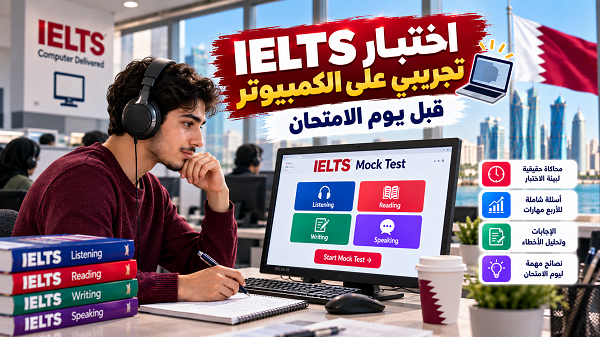
إذا كنت تستعد لتقديم IELTS على الكمبيوتر في قطر، فإن حل الأسئلة من الكتب وحده لا يكفي دائمًا.
قبل يوم الامتحان، من المهم أن تعرف كيف ستتعامل مع Reading على الشاشة، وكيف ستكتب Writing باستخدام لوحة المفاتيح، وكيف تدير وقتك أثناء Listening وReading، وكيف تتصرف عندما تواجه سؤالًا صعبًا.
لهذا السبب، فإن اختبار IELTS على الكمبيوتر تجريبي يمكن أن يكون خطوة مهمة قبل حجز الامتحان أو قبل موعده مباشرة.
في هذه الصفحة، ستجد اختبارًا تدريبيًا شاملًا يحاكي المهارات الأساسية في IELTS، مع أسئلة Reading وListening، ومهام Writing، وأسئلة Speaking، بالإضافة إلى Answer Key وطريقة تحليل الأخطاء وخطة للاستفادة من النتيجة.
مهم: هذا الاختبار تدريبي أصلي من IFI Qatar وليس اختبار IELTS رسميًا. نتيجته تشخيصية فقط ولا تمنح Band Score رسميًا أو Test Report Form.
كيف تستخدم اختبار IELTS على الكمبيوتر تجريبي؟
للحصول على نتيجة أكثر فائدة، تعامل مع هذا الاختبار باعتباره محاكاة فعلية وليس مجرد مجموعة أسئلة.
جهّز بيئة IELTS Computer Practice
استخدم:
- كمبيوتر أو Laptop.
- سماعات مناسبة لقسم Listening.
- لوحة مفاتيح مريحة.
- مكان هادئ.
- Timer.
- ورقة وقلم للملاحظات عند الحاجة.
إذا كنت ستقدم IELTS on Computer، حاول إجراء جزء كبير من التدريب على الكمبيوتر نفسه بدل الاعتماد على الهاتف فقط.
التزم بالوقت
لا تمنح نفسك وقتًا إضافيًا عندما تواجه سؤالًا صعبًا.
إذا لم تعرف الإجابة، انتقل إلى السؤال التالي ثم عد إليها إذا كان ذلك ممكنًا.
الهدف من Computer IELTS Mock Test ليس فقط معرفة عدد الإجابات الصحيحة، بل معرفة مدى قدرتك على العمل تحت ضغط الوقت.
حلل النتيجة بعد انتهاء الاختبار
لا تكتفِ بكتابة:
30/40
بدلًا من ذلك، أنشئ Error Log يتضمن:
- رقم السؤال.
- إجابتك.
- الإجابة الصحيحة.
- سبب الخطأ.
- نوع الخطأ.
- المهارة التي تحتاج إلى تحسينها.
بهذه الطريقة تتحول نتيجة الـMock Test إلى خطة دراسة.
اختبار IELTS Listening على الكمبيوتر: 40 سؤالًا
في IELTS Listening، يتكون الاختبار من أربعة أجزاء و40 سؤالًا، ويتم تشغيل كل تسجيل مرة واحدة.
في هذا التدريب، سنستخدم أربعة Parts مشابهة من حيث نوع المهام، مع Transcripts للمراجعة بعد محاولة الإجابة.
IELTS Listening Part 1: محادثة يومية
Questions 1–10
Questions 1–5: Form Completion
Complete the form below.
DOHA LANGUAGE CLUB – NEW MEMBER
- Full name: Sara __________
- Course: __________ English
- Preferred class day: __________
- Class starts at: __________ p.m.
- Membership fee: __________ QAR
Questions 6–10: Multiple Choice
6. Why does Sara want to join the course?
A. To study at university
B. To improve her English for work
C. To prepare for migration
D. To meet new people
7. How did Sara hear about the language club?
A. Through a friend
B. Through social media
C. Through her university
D. Through a newspaper
8. What does Sara need to bring to her first class?
A. A laptop
B. Her passport
C. A notebook
D. A placement test
9. How long is each lesson?
A. 45 minutes
B. 60 minutes
C. 75 minutes
D. 90 minutes
10. When will Sara receive her course materials?
A. Before the first class
B. At registration
C. During the first lesson
D. By email after the course
Transcript – Part 1
Receptionist: Good morning, Doha Language Club. How can I help you?
Sara: Hi. I’d like to ask about your English courses.
Receptionist: Certainly. Are you looking for General English or IELTS preparation?
Sara: IELTS preparation, actually. I need to improve my English for work and I’m planning to take the exam in a few months.
Receptionist: In that case, our IELTS preparation course could be suitable. Can I take your name?
Sara: Sara Ahmed.
Receptionist: And which class would you prefer?
Sara: I work during the week, so Saturday would be better.
Receptionist: We have a Saturday class starting at 5:30 p.m.
Sara: That sounds good. How much is the membership?
Receptionist: The course fee is 850 QAR.
Sara: And how did you hear about us?
Receptionist: Actually, I’m asking you that question.
Sara: Oh, sorry! I found you through Instagram.
Receptionist: No problem. For your first class, please bring a notebook. You don’t need a laptop.
Sara: How long is each lesson?
Receptionist: Seventy-five minutes.
Sara: And when do I get the course materials?
Receptionist: You’ll receive them by email after you complete registration.
IELTS Listening Part 2: Information and Location
Questions 11–20
Questions 11–15: Multiple Choice
11. The new IELTS centre is located near:
A. A university
B. A shopping mall
C. A metro station
D. A hospital
12. The reception desk is on:
A. The ground floor
B. The first floor
C. The second floor
D. The fourth floor
13. Students should arrive:
A. 10 minutes early
B. 15 minutes early
C. 20–30 minutes early
D. One hour early
14. Which item is not allowed in the testing room?
A. Identification document
B. Water
C. Mobile phone
D. Pencil
15. The computer room has:
A. 20 seats
B. 24 seats
C. 30 seats
D. 40 seats
Questions 16–20: Note Completion
IELTS COMPUTER TEST CENTRE
- Test type: IELTS __________
- Main test room: Room __________
- Speaking interviews are held on the __________ floor.
- Candidates must bring their original __________.
- The test centre opens at __________ a.m.
Transcript – Part 2
Welcome to the new IELTS Computer Test Centre in Doha.
The centre is located close to a metro station, making it easy for candidates to reach the building.
When you arrive, go to the reception desk on the first floor. Candidates should arrive approximately 20 to 30 minutes before their scheduled test time.
Before entering the test room, you will need to follow the centre’s security procedures. Your original identification document is required. Mobile phones and other personal electronic devices are not permitted inside the test room.
The main computer testing room is Room 204, which contains 30 computer stations.
Speaking interviews are held separately on the third floor.
The centre offers both Academic and General Training IELTS sessions, depending on the published timetable.
The centre opens at 7:30 in the morning, although candidates should follow the arrival instructions provided with their booking.
IELTS Listening Part 3: Student Discussion
Questions 21–30
Questions 21–25: Multiple Choice
21. What are the students discussing?
A. A language course
B. A university presentation
C. A research project
D. A travel plan
22. What problem does Omar have?
A. He cannot find enough sources.
B. He has missed a deadline.
C. He does not understand the topic.
D. He cannot use the library.
23. What does Lina suggest they do first?
A. Write the conclusion
B. Find more statistics
C. Divide the research tasks
D. Contact the professor
24. Which source does Omar prefer?
A. Books
B. Newspapers
C. Academic journals
D. Social media
25. When will they meet again?
A. Monday morning
B. Tuesday afternoon
C. Wednesday evening
D. Thursday morning
Questions 26–30: Note Completion
Research Project
- Topic: The impact of __________ on university students
- Number of interviews needed: __________
- Omar will analyse the __________ data.
- Lina will prepare the __________ section.
- Final presentation length: __________ minutes
Transcript – Part 3
Lina: Have you started the research project?
Omar: A little. I’ve read several articles, but I’m not sure what to do next.
Lina: Maybe we should divide the research tasks first.
Omar: Good idea. Our topic is the impact of social media on university students, right?
Lina: Yes. We also need to interview ten students.
Omar: I can analyse the survey and interview data.
Lina: Great. I’ll work on the introduction and literature review.
Omar: I usually prefer books, but I think academic journals will be more useful for this project.
Lina: I agree.
Omar: When should we meet again?
Lina: How about Wednesday evening?
Omar: That works.
Lina: And remember, the presentation should be fifteen minutes long.
IELTS Listening Part 4: Academic Lecture
Questions 31–40
Questions 31–35: Sentence Completion
- Good sleep can improve __________ and concentration.
- Students who sleep poorly may have difficulty __________ information.
- Blue light from screens can affect the body’s __________.
- Experts recommend reducing screen use before __________.
- A regular sleep schedule can improve sleep __________.
Questions 36–40: Multiple Choice
36. What is one common reason students sleep late?
A. Exercise
B. Social media
C. Healthy eating
D. Morning classes
37. What should students avoid before sleeping?
A. Reading
B. Drinking water
C. Heavy meals
D. Listening to music
38. According to the speaker, exercise is best done:
A. Immediately before sleep
B. During the day
C. Only in the morning
D. Once a week
39. What is the main message of the lecture?
A. Students need more academic work.
B. Sleep is connected to learning and performance.
C. Technology should be banned.
D. University students sleep too much.
40. The speaker recommends changing habits:
A. All at once
B. Only during exams
C. Gradually
D. Once a year
Transcript – Part 4
Today we are going to discuss the relationship between sleep and academic performance.
Research suggests that adequate sleep can improve memory and concentration. Students who regularly sleep poorly may have difficulty remembering information and maintaining attention during lectures.
Another issue is screen use. Blue light from phones, tablets and computers can affect the body’s natural sleep rhythm. For this reason, reducing screen use before bedtime can be helpful.
A regular sleep schedule may also improve sleep quality.
Students often stay awake because they use social media late at night. However, changing this habit does not necessarily require a dramatic lifestyle change. Small changes made gradually can be easier to maintain.
Students should also avoid very heavy meals immediately before going to bed.
Exercise is beneficial as well, particularly when it is included as part of a regular daytime routine.
The main point is simple: sleep is not separate from academic performance. Good sleep can support memory, concentration and learning.
إجابات IELTS Listening Mock Test
| السؤال | الإجابة |
|---|---|
| 1 | Ahmed |
| 2 | IELTS |
| 3 | Saturday |
| 4 | 5:30 |
| 5 | 850 |
| 6 | B |
| 7 | B |
| 8 | C |
| 9 | C |
| 10 | D |
| 11 | C |
| 12 | B |
| 13 | C |
| 14 | C |
| 15 | C |
| 16 | Academic |
| 17 | 204 |
| 18 | third |
| 19 | identification document |
| 20 | 7:30 |
| 21 | C |
| 22 | C |
| 23 | C |
| 24 | C |
| 25 | C |
| 26 | social media |
| 27 | 10 |
| 28 | survey and interview |
| 29 | introduction and literature review |
| 30 | 15 |
| 31 | memory |
| 32 | remembering |
| 33 | sleep rhythm |
| 34 | bedtime |
| 35 | quality |
| 36 | B |
| 37 | C |
| 38 | B |
| 39 | B |
| 40 | C |
كيف تحلل أخطاء IELTS Listening؟
بعد تصحيح الإجابات، صنف الأخطاء بدل الاكتفاء بالنتيجة النهائية.
أخطاء فهم التسجيل
إذا لم تفهم الكلمة أو الجملة، سجلها وراجعها بعد الاختبار.
أخطاء Distractors
إذا اخترت إجابة ثم تغيرت المعلومة لاحقًا، فقد تكون المشكلة في عدم الانتباه إلى التغيير في التسجيل.
أخطاء Spelling
قد تعرف الإجابة ولكن تخسر النقطة بسبب كتابة الكلمة بطريقة خاطئة.
أخطاء التركيز
إذا فقدت عدة أسئلة متتالية، فقد تكون المشكلة في التركيز وليس في مستوى اللغة فقط.
أخطاء Prediction
قبل الاستماع، حاول توقع نوع الإجابة المطلوبة:
- Name
- Number
- Date
- Place
- Noun
- Adjective
هذه الخطوة تساعدك على متابعة التسجيل بشكل أكثر فعالية.
اختبار IELTS Reading على الكمبيوتر
حاول إنهاء قسم Reading التدريبي خلال 60 دقيقة.
لا تستخدم قاموسًا، ولا تبحث عن الإجابات أثناء الاختبار.
ركز على:
- Skimming.
- Scanning.
- Keywords.
- Paraphrasing.
- Main Ideas.
- Specific Details.
IELTS Reading Passage 1: Learning in a Digital Environment
For many students, digital learning has become a normal part of education. Online courses, recorded lectures and educational platforms allow learners to access information without being physically present in a classroom.
One advantage of digital learning is flexibility. Students can often decide when and where to study. This can be particularly useful for people who work or have family responsibilities.
However, flexibility can also create challenges. Without a fixed classroom schedule, some students find it difficult to maintain a consistent study routine. Notifications, social media and other online activities may also reduce concentration.
Another important factor is interaction. Traditional classrooms allow students to ask questions and communicate directly with teachers and classmates. Digital platforms can provide similar opportunities, but the quality of interaction depends on the course design and technology being used.
Digital learning therefore does not automatically produce better results. Its effectiveness depends on how learners use the technology and how well the course is organised.
Questions 1–5: True / False / Not Given
- Digital learning requires students to attend a physical classroom.
- Flexibility can benefit students with work responsibilities.
- All students find digital learning easier than classroom learning.
- Online distractions can affect concentration.
- Digital courses always provide better interaction than traditional classrooms.
Questions 6–9: Multiple Choice
- What is one advantage of digital learning?
A. Lower examination standards
B. Flexible study times
C. Fewer assignments
D. More classroom interaction
- What can make digital learning difficult?
A. Too many textbooks
B. Lack of technology
C. Poor study routines
D. Short lessons
- What affects interaction in digital courses?
A. Course design and technology
B. Student age
C. Classroom size
D. Examination fees
- What is the main idea of the passage?
A. Digital learning is always better.
B. Traditional classrooms should disappear.
C. Digital learning can be useful but depends on how it is organised and used.
D. Students should avoid technology.
Question 10: Sentence Completion
- Digital learning can be useful for students who have work or __________ responsibilities.
IELTS Reading Passage 2: The Future of Urban Transport
Cities around the world are searching for ways to make transportation more efficient and sustainable. Population growth has increased pressure on roads, while concerns about air pollution have encouraged governments to consider alternatives to traditional private cars.
Public transportation remains one of the most important solutions. Buses, trains and metro systems can move large numbers of passengers while using less road space per person than individual cars.
Technology is also changing urban transportation. Electric vehicles are becoming increasingly common, while digital applications allow passengers to check schedules, pay fares and plan journeys.
However, technology alone cannot solve every transportation problem. A city may introduce electric cars without reducing congestion if the number of vehicles continues to grow.
Urban planners therefore increasingly focus on combining different solutions. These may include reliable public transport, safer walking routes, cycling infrastructure and policies that discourage unnecessary car use.
The goal is not necessarily to eliminate private vehicles completely. Instead, cities can provide people with enough alternatives that they do not need to use cars for every journey.
Questions 11–15: Matching Information
Which paragraph contains the following information?
A. Paragraph 1
B. Paragraph 2
C. Paragraph 3
D. Paragraph 4
E. Paragraph 5
- Technology cannot solve every transportation problem.
- Population growth has increased pressure on roads.
- Public transportation can move many people efficiently.
- Cities may need several solutions rather than one.
- People should have alternatives to using private cars.
Questions 16–20: Multiple Choice
- Why are governments considering alternatives to private cars?
A. Cars are becoming cheaper.
B. Roads are becoming wider.
C. Cities face congestion and pollution concerns.
D. Public transport is disappearing.
- What can digital applications help passengers do?
A. Build roads
B. Check schedules and pay fares
C. Repair vehicles
D. Reduce ticket prices automatically
- What could happen if electric cars increase without other changes?
A. Congestion may continue.
B. Public transport will disappear.
C. Roads will become safer automatically.
D. Walking will become impossible.
- What does the passage suggest about private cars?
A. They should be completely banned.
B. They should be used for every journey.
C. They can remain available while alternatives are improved.
D. They are the only sustainable option.
- What is the main goal of future urban transport planning?
A. Increase car ownership
B. Provide more practical transportation choices
C. Remove public transport
D. Build larger parking areas
IELTS Reading Passage 3: Why People Learn New Languages
Learning a new language is often associated with education, travel or employment. However, research into language learning suggests that the benefits may extend beyond communication.
One important benefit is improved awareness of how language works. When learners compare their first language with another language, they may become more conscious of grammar, vocabulary and sentence structure.
Language learning can also encourage cultural understanding. A language is closely connected to the history and social practices of the people who use it. Learning expressions and communication styles can therefore provide insights that are difficult to gain from translation alone.
Motivation plays an important role in successful language learning. Some learners are motivated by practical goals, such as employment or university admission. Others enjoy the challenge or want to communicate with family members and friends.
However, motivation can change over time. A learner who begins with strong enthusiasm may lose interest when progress becomes slower. For this reason, successful learners often create realistic short-term goals rather than focusing only on a distant final result.
Regular exposure is also important. Learners who use the language frequently are more likely to remember new vocabulary and become comfortable producing language.
This does not mean that every learner needs to study for several hours each day. Short, regular practice can be more sustainable than occasional long study sessions.
Ultimately, successful language learning is less about finding one perfect method and more about creating a routine that the learner can maintain.
Questions 21–25: Multiple Choice
- What can comparing languages help learners understand?
A. Geography
B. Language structure
C. Mathematics
D. History only
- Why can language learning support cultural understanding?
A. Languages are connected to social practices.
B. All cultures use the same expressions.
C. Translation is always inaccurate.
D. Grammar explains every cultural difference.
- Why can learners lose motivation?
A. They study too little vocabulary.
B. Progress can become slower.
C. Languages are impossible to learn.
D. Teachers stop teaching them.
- What do successful learners often do?
A. Set realistic short-term goals.
B. Study only once a month.
C. Avoid speaking.
D. Memorise entire dictionaries.
- What does the passage say about study time?
A. Several hours every day are essential.
B. Long sessions are always better.
C. Short and regular practice can be effective.
D. Study time does not matter.
Questions 26–30: True / False / Not Given
- Employment is one possible reason for learning a language.
- All learners are motivated by university admission.
- Motivation never changes after a learner starts studying.
- Frequent exposure can help learners remember vocabulary.
- The writer recommends studying exactly one hour every day.
Questions 31–35: Sentence Completion
- Language learning can increase awareness of grammar, vocabulary and __________ structure.
- Some learners want to communicate with family members and __________.
- Successful learners often create realistic __________-term goals.
- Regular exposure can help learners remember new __________.
- Short practice sessions may be more __________ than occasional long sessions.
Questions 36–40: Multiple Choice
- What is the main purpose of the passage?
A. To explain factors that contribute to successful language learning
B. To compare English with other languages
C. To argue that language schools are unnecessary
D. To explain how children learn their first language
- What does the passage suggest about motivation?
A. It is unnecessary.
B. It can change over time.
C. It only comes from employment.
D. It improves automatically.
- What is important for vocabulary development?
A. Avoiding communication
B. Regular language exposure
C. Memorising every word
D. Studying only grammar
- What does the writer mean by a “routine that the learner can maintain”?
A. A study plan that is realistic over time
B. A very intensive schedule
C. A plan created by a university
D. A method involving no practice
- Which statement best summarises the final paragraph?
A. There is one perfect language-learning method.
B. Long study sessions are essential.
C. Sustainable regular practice is more important than finding one perfect method.
D. Language learning should only happen in classrooms.
إجابات IELTS Reading Mock Test
| السؤال | الإجابة |
|---|---|
| 1 | False |
| 2 | True |
| 3 | Not Given |
| 4 | True |
| 5 | False |
| 6 | B |
| 7 | C |
| 8 | A |
| 9 | C |
| 10 | family |
| 11 | D |
| 12 | A |
| 13 | B |
| 14 | E |
| 15 | E |
| 16 | C |
| 17 | B |
| 18 | A |
| 19 | C |
| 20 | B |
| 21 | B |
| 22 | A |
| 23 | B |
| 24 | A |
| 25 | C |
| 26 | True |
| 27 | False |
| 28 | False |
| 29 | True |
| 30 | Not Given |
| 31 | sentence |
| 32 | friends |
| 33 | short |
| 34 | vocabulary |
| 35 | sustainable |
| 36 | A |
| 37 | B |
| 38 | B |
| 39 | A |
| 40 | C |
كيف تحلل أخطاء IELTS Reading؟
أخطاء Matching Headings وMatching Information
إذا أخطأت في هذه الأسئلة، ركز على فهم الفكرة الرئيسية للفقرة بدل البحث عن تطابق حرفي بين الكلمات.
أخطاء True / False / Not Given
اسأل:
- هل النص يؤكد المعلومة؟
- هل النص يقول عكسها؟
- أم لا توجد معلومات كافية؟
لا تعتمد على معلوماتك الشخصية.
أخطاء Multiple Choice
راجع الخيارات الخاطئة التي جذبتك.
قد يحتوي أحد الخيارات على كلمة موجودة فعلًا في النص، لكنه لا يجيب السؤال.
أخطاء Sentence Completion
راجع:
- Word Limit.
- Spelling.
- Grammar.
- نوع الكلمة المطلوبة.
IELTS Writing Practice على الكمبيوتر
في IELTS on Computer، تتم مهام Writing باستخدام الكمبيوتر في النسخة المحوسبة المعتادة.
خصص 60 دقيقة للمهمتين.
IELTS Academic Writing Task 1
You should spend about 20 minutes on this task.
The table below shows the percentage of university students who used four different methods of transportation to travel to campus in 2015 and 2025.
Write at least 150 words.
| Transportation | 2015 | 2025 |
|---|---|---|
| Car | 45% | 30% |
| Bus | 30% | 35% |
| Bicycle | 10% | 20% |
| Walking | 15% | 15% |
قبل الكتابة، حدد:
- Overall trend.
- أكبر ارتفاع.
- أكبر انخفاض.
- أهم المقارنات.
لا تحول Task 1 إلى قائمة أرقام.
IELTS Writing Task 2
You should spend about 40 minutes on this task.
Some people believe that students should study online because it is more flexible, while others believe that students learn better in a traditional classroom.
Discuss both views and give your own opinion.
Write at least 250 words.
بعد الانتهاء، راجع:
- هل أجبت عن السؤال بالكامل؟
- هل ناقشت كلا الرأيين؟
- هل أوضحت رأيك؟
- هل Introduction واضحة؟
- هل Body Paragraphs منظمة؟
- هل استخدمت أمثلة مناسبة؟
- هل يوجد Conclusion؟
- هل راجعت Grammar؟
- هل راجعت Spelling؟
- هل عدد الكلمات مناسب؟
IELTS Speaking Practice قبل الامتحان
في IELTS on Computer داخل مركز الاختبار، لا يعني استخدام الكمبيوتر أن Speaking يصبح اختبارًا آليًا.
يتم Speaking مع ممتحن IELTS مدرب.
IELTS Speaking Part 1
أجب عن الأسئلة التالية:
- Do you work or study?
- What do you enjoy most about your studies or work?
- How often do you use a computer?
- What do you usually use your computer for?
- Do you prefer studying alone or with other people?
- What kind of websites do you visit regularly?
- Do you enjoy learning English?
- What is the most difficult part of learning English?
حاول ألا تجعل إجاباتك قصيرة جدًا.
بدلًا من:
“Yes, I do.”
أضف سببًا أو مثالًا.
IELTS Speaking Part 2
You have one minute to prepare.
Describe a skill you would like to improve.
You should say:
- What the skill is.
- Why you want to improve it.
- How you plan to improve it.
And explain how this skill could help you in the future.
تحدث لمدة تصل إلى دقيقتين.
IELTS Speaking Part 3
ناقش الأسئلة التالية:
- Why do people need to continue learning new skills?
- Do you think technology makes learning easier?
- What skills will be important for future jobs?
- Should schools teach more practical skills?
- Is online learning as effective as classroom learning?
- How might education change in the next ten years?
استخدم هذه البنية لمساعدتك على تطوير الإجابة:
Opinion → Reason → Example → Result
لا تحفظ إجابة كاملة.
كيف تحسب نتيجة IELTS Computer Mock Test؟
في Listening وReading، يمكنك حساب عدد الإجابات الصحيحة من أصل 40.
لكن هذه النتيجة في هذا الاختبار تشخيصية وليست Band Score رسمية.
| الإجابات الصحيحة | التفسير التدريبي |
|---|---|
| 35–40 | مستوى قوي جدًا |
| 30–34 | مستوى جيد جدًا |
| 26–29 | مستوى جيد |
| 20–25 | تحتاج إلى مزيد من التدريب |
| أقل من 20 | تحتاج إلى خطة تحضير أكثر تنظيمًا |
هذه الحدود مخصصة لهذا الـPractice Test فقط، ولا ينبغي استخدامها باعتبارها تحويلًا رسميًا إلى IELTS Band Score.
في الاختبار الرسمي، يتم تحويل نتائج Listening وReading من 40 سؤالًا إلى مقياس IELTS من 9 Bands، وقد يختلف عدد الإجابات المطلوبة لكل Band قليلًا بحسب نسخة الاختبار.
ماذا تفعل بعد انتهاء Computer IELTS Mock Test؟
لا تعيد الاختبار مباشرة.
استخدم النتيجة لتحديد المشكلة.
إذا كانت مشكلتك في Listening
ركز على:
- Prediction.
- Spelling.
- Numbers.
- Names.
- Distractors.
- Different accents.
إذا كانت مشكلتك في Reading
ركز على:
- Skimming.
- Scanning.
- Paraphrasing.
- Matching Headings.
- True/False/Not Given.
- Time Management.
إذا كانت مشكلتك في Writing
احصل على Feedback وراجع:
- Task Response.
- Coherence and Cohesion.
- Lexical Resource.
- Grammatical Range and Accuracy.
إذا كانت مشكلتك في Speaking
تدرب على:
- Fluency.
- Vocabulary.
- Grammar.
- Pronunciation.
- تطوير الإجابة.
- Speaking under time pressure.
كيف تعرف أنك جاهز لـ IELTS على الكمبيوتر؟
لا تعتمد على Mock Test واحد فقط.
ابحث عن مؤشرات أكثر ثباتًا.
جاهزية Listening
نتائجك مستقرة في عدة اختبارات تدريبية.
جاهزية Reading
تستطيع إنهاء الاختبار في الوقت المحدد مع ترك وقت كافٍ للتعامل مع الأسئلة الصعبة.
جاهزية Writing
تستطيع إنهاء Task 1 وTask 2 في الوقت مع ترك دقائق للمراجعة.
جاهزية Speaking
تستطيع التحدث بشكل طبيعي دون الاعتماد على إجابات محفوظة.
جاهزية Computer Skills
تستطيع الكتابة، استخدام الفأرة، قراءة النصوص على الشاشة والتنقل بين الأسئلة دون أن يستهلك ذلك وقتًا كبيرًا.
ما خطة الأسبوع الأخير قبل IELTS Computer؟
قبل 7 أيام
قم بـ Full Computer Mock Test.
بعده، حلل الأخطاء بالتفصيل.
قبل 5 أيام
ركز على أضعف مهارتين لديك بدل محاولة تحسين كل شيء في وقت واحد.
قبل 3 أيام
قم بجلسة قصيرة من IELTS Computer Practice.
تدرب خصوصًا على Writing باستخدام لوحة المفاتيح.
قبل يوم واحد
لا تحاول حل اختبار كامل جديد.
راجع:
- Question Types.
- Time Management.
- Writing Structure.
- Speaking Strategies.
- تعليمات المركز.
- وثيقة الهوية المطلوبة.
- موعد ومكان الاختبار.
ثم احصل على نوم جيد.
ما الفرق بين Computer IELTS Mock Test والاختبار الرسمي؟
| العنصر | Computer IELTS Mock Test | IELTS Official Test |
|---|---|---|
| الهدف | التدريب والتشخيص | التقييم الرسمي |
| النتيجة | تقديرية/تشخيصية | Band Score رسمي |
| Test Report Form | لا | نعم |
| الأسئلة | تدريبية | اختبار رسمي |
| قيمة النتيجة | لا تستخدم رسميًا | تقدم للجهات التي تقبل IELTS |
| التدريب على الوقت | نعم | نعم |
| تحليل الأخطاء | حسب الخدمة | ليس جزءًا من النتيجة الرسمية |
لذلك، لا تستخدم نتيجة Mock Test كبديل عن النتيجة الرسمية.
استخدمها للإجابة عن سؤال واحد:
هل أنا مستعد للامتحان الحقيقي؟
هل يكفي Mock Test واحد قبل IELTS؟
يمكن لاختبار واحد أن يعطيك نقطة بداية، لكنه قد لا يكشف الصورة الكاملة.
إذا كانت نتائجك غير مستقرة، قم بإجراء Mock Test آخر بعد فترة من التدريب.
والأفضل أن تستخدم التسلسل التالي:
Mock Test → Error Analysis → Targeted Practice → Mock Test
بدلًا من:
Mock Test → Score → Mock Test → Score
لأن الهدف ليس جمع النتائج، وإنما تحسين الأداء.
هل اختبار IELTS على الكمبيوتر التجريبي هذا رسمي؟
لا.
هذا Practice Test أصلي من IFI Qatar ومصمم للتدريب على المهارات وأنواع الأسئلة وبيئة IELTS Computer.
لا يمثل أسئلة IELTS الرسمية، ولا يمنح Band Score رسميًا أو Test Report Form.
للتدريب على الواجهة الرسمية، يوفر IELTS نفسه تجربة Practice على الكمبيوتر تساعد المتقدم على التعرف على شكل Listening وReading وWriting وطريقة التفاعل معها.
متى تحتاج إلى IELTS Computer Mock Test إضافي؟
قد تحتاج إلى Mock Test آخر إذا:
- كانت نتيجتك أقل بكثير من Target Band.
- لم تنتهِ من Reading في الوقت.
- خسرت درجات كثيرة في Listening.
- لم تنتهِ من Writing.
- شعرت بعدم الراحة أثناء استخدام الكمبيوتر.
- لم تكن معتادًا على قراءة النصوص الطويلة على الشاشة.
- كانت نتائجك غير مستقرة.
- لا تعرف سبب أخطائك.
في هذه الحالة، لا تكرر الاختبار فقط.
حدد المشكلة أولًا ثم قم بتدريب موجه.
لماذا تحتاج إلى IELTS Mock Test في قطر قبل الامتحان؟
إذا كنت تستعد لـ IELTS في قطر، فإن Mock Test يمكن أن يساعدك على اكتشاف الفجوة بين الدراسة وأداء الاختبار.
قد تعرف Grammar جيدًا، ولكنك لا تستخدمها بشكل دقيق أثناء Writing.
وقد تكون جيدًا في Reading، لكنك تخسر نقاطًا بسبب الوقت.
وقد تمتلك Vocabulary جيدة، لكنك تواجه مشكلة في Speaking Fluency.
الاختبار التجريبي يجعل هذه المشاكل أكثر وضوحًا.
كما أن IFI Qatar يوفر خيارات IELTS Mock Test للمتقدمين في قطر، بما في ذلك Academic وGeneral Training، مع خيارات Feedback بحسب الخدمة المختارة.
كيف تحجز IELTS Mock Test في قطر؟
إذا كانت نتيجة التدريب تشير إلى أنك تحتاج إلى تقييم أكثر تنظيمًا، يمكنك الانتقال إلى Mock Test في مركز IELTS.
قبل الحجز، تأكد من:
- نوع الاختبار: Academic أو General Training.
- طريقة الاختبار: Computer أو الخيار المتاح في الجلسة.
- موعد الاختبار.
- هل يوجد Feedback.
- هل الاختبار كامل أم Skill-specific.
- هل يشمل المهارات الأربع.
إذا كان هدفك حجز IELTS الحقيقي بعد الـMock Test، فمن الأفضل أن تستخدم النتيجة لتحديد الوقت المناسب للاختبار الرسمي بدل حجز موعد قريب دون معرفة مستواك.
احجز IELTS Computer Mock Test في قطر مع IFI Qatar
إذا كان موعد IELTS قريبًا، لا تنتظر يوم الامتحان لمعرفة مدى استعدادك.
ابدأ باختبار تجريبي، حلل أخطاءك، حدد نقاط ضعفك، ثم استخدم النتيجة لبناء خطة تحضير واضحة.
في IFI Qatar، يمكنك إجراء IELTS Mock Test في الدوحة والتدرب على تجربة الاختبار قبل موعد IELTS الرسمي.
إذا كنت تستعد لـ IELTS على الكمبيوتر في قطر، احجز Mock Test الآن واكتشف نقاط ضعفك قبل يوم الامتحان.
الأسئلة الشائعة حول اختبار IELTS على الكمبيوتر تجريبي
هل يوجد IELTS Computer Mock Test قبل الامتحان؟
نعم. يمكنك استخدام Computer IELTS Practice للتدرب على شكل الاختبار، أنواع الأسئلة، إدارة الوقت وطريقة التعامل مع البيئة الرقمية.
هل IELTS Computer Mock Test يعطي Band Score رسمي؟
لا. الـMock Test يعطي نتيجة تشخيصية، لكنه لا يمنح Band Score رسميًا أو Test Report Form.
هل IELTS على الكمبيوتر أصعب من الاختبار الورقي؟
لا. طريقة تقديم الاختبار تختلف، لكن استخدام الكمبيوتر لا يعني أن الاختبار أسهل أو أصعب من حيث معيار التقييم.
هل Listening في IELTS Computer يتم مرة واحدة؟
نعم. في IELTS Listening يتم تشغيل كل تسجيل مرة واحدة، ويتكون القسم من أربعة Parts و40 سؤالًا.
هل يمكنني التدرب على IELTS Computer في المنزل؟
نعم. يمكنك استخدام Computer IELTS Practice والتدرب على القراءة والكتابة والاستماع باستخدام الكمبيوتر قبل الاختبار.
هل Speaking في IELTS Computer يتم على الكمبيوتر؟
لا. في IELTS on Computer داخل مركز الاختبار، يتم Speaking مع ممتحن IELTS مدرب.
كم عدد أسئلة IELTS Listening؟
يتكون Listening من 40 سؤالًا موزعة على أربعة Parts.
كم عدد أسئلة IELTS Reading؟
يتكون Reading من 40 سؤالًا، مع اختلاف النصوص حسب Academic أو General Training.
هل يمكنني استخدام هذا الاختبار لـ IELTS Academic؟
نعم. يمكن استخدامه كـPractice، لكن يجب تذكر أن الأسئلة الموجودة هنا أصلية وليست أسئلة IELTS رسمية.
هل يمكنني استخدام هذا الاختبار لـ IELTS General Training؟
يمكن استخدام Listening وSpeaking للتدريب العام، لكن يجب أن تستخدم مواد Reading وWriting متوافقة مع General Training إذا كان هذا هو الاختبار الذي ستقدمه.
ماذا أفعل إذا كانت نتيجتي منخفضة؟
لا تحجز الاختبار الرسمي مباشرة. حلل أخطاءك، حدد المهارة الأضعف، تدرب عليها ثم أعد اختبارًا تجريبيًا بعد فترة من التدريب.
هل يكفي Mock Test واحد قبل IELTS؟
اختبار واحد مفيد لتحديد نقطة البداية، لكن إجراء أكثر من Mock Test أثناء التحضير يمكن أن يساعدك على معرفة ما إذا كان مستواك يتحسن بشكل مستقر.
هل يمكنني حجز IELTS Mock Test في IFI Qatar؟
نعم. توفر IFI Qatar خيارات IELTS Mock Test في الدوحة، بما في ذلك Academic وGeneral Training، ويمكن استخدام الاختبار لتقييم جاهزيتك قبل الامتحان.
ابدأ التحضير لـ IELTS Computer في قطر
الاستعداد لـ IELTS على الكمبيوتر لا يعني فقط حل أسئلة أكثر.
يجب أن تكون قادرًا على التعامل مع:
- Reading على الشاشة.
- Listening باستخدام الكمبيوتر.
- Writing باستخدام لوحة المفاتيح.
- إدارة الوقت.
- أنواع الأسئلة.
- مراجعة الإجابات.
- Speaking مع ممتحن.
ولهذا فإن اختبار IELTS على الكمبيوتر تجريبي قبل الامتحان يمكن أن يكشف نقاط ضعف قد لا تظهر أثناء الدراسة اليومية.
اختبر مستواك، حلل أخطاءك، حسّن نقاط ضعفك، ثم احجز IELTS Mock Test في قطر إذا كنت تريد تقييمًا أكثر تنظيمًا قبل موعد IELTS الرسمي.