

Currently Empty: ر.ق 0,00


IELTS
IELTS Listening Mock Test كامل مع الإجابات
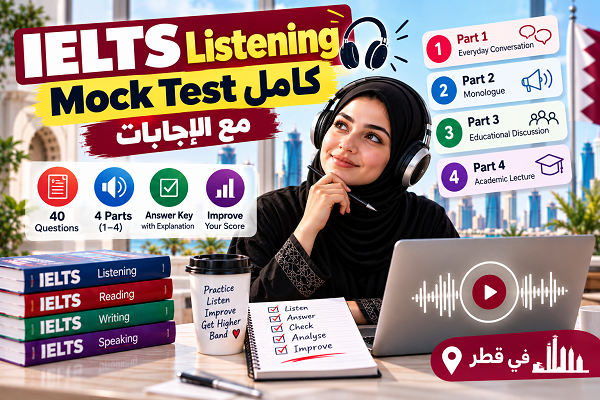
إذا كنت تستعد لاختبار IELTS في قطر وتريد معرفة مستواك في IELTS Listening، فهذا الاختبار التجريبي يمنحك فرصة للتدرب على 40 سؤالاً تغطي مجموعة من أشهر أنماط أسئلة الاستماع.
يتكون هذا IELTS Listening Mock Test من أربعة أجزاء:
- Part 1: محادثة في موقف يومي.
- Part 2: حديث فردي عن مكان أو خدمة.
- Part 3: محادثة في سياق تعليمي.
- Part 4: محاضرة أكاديمية قصيرة.
مهم: هذا اختبار تدريبي أصلي من إعداد IFI Qatar، وليس اختبار IELTS رسمياً. الهدف منه هو التدريب على مهارات الاستماع، وإدارة الوقت، وتحليل الأخطاء.
في IELTS Listening الرسمي، يتكون الاختبار من أربعة أجزاء و40 سؤالاً، وتُسمع التسجيلات مرة واحدة فقط، مع استخدام مجموعة متنوعة من أنواع الأسئلة. يحصل كل جواب صحيح على درجة واحدة قبل تحويل النتيجة إلى Band Score.
كيف تستخدم IELTS Listening Mock Test بشكل صحيح؟
للحصول على نتيجة أكثر واقعية، تعامل مع الاختبار كأنك في الامتحان الحقيقي.
قبل بدء اختبار IELTS Listening
جهّز:
- ورقة وقلم.
- مؤقتاً.
- مكاناً هادئاً.
- حوالي 30 دقيقة للتدريب.
- لا تستخدم قاموساً أو مترجماً.
اقرأ الأسئلة أولاً، ثم استخدم الـ Transcript الموجود في كل Part بطريقة تحاكي التسجيل: اقرأه مرة واحدة فقط ولا تتوقف أثناء القراءة.
إذا كنت تتدرب مع مدرس أو شخص آخر، اجعله يقرأ الـ Transcript لك دون أن ترى النص أثناء الاستماع.
أثناء IELTS Listening Practice
لا توقف الـ Transcript.
لا تعد إلى السؤال السابق إذا فاتتك الإجابة.
ركز على السؤال الحالي وانتقل إلى التالي.
بعد انتهاء IELTS Listening Test
لا تنظر فقط إلى عدد الإجابات الصحيحة.
راجع:
- أين أخطأت؟
- لماذا أخطأت؟
- هل لم تفهم الكلمة؟
- هل وقعت في Distractor؟
- هل أخطأت في Spelling؟
- هل لم تتوقع نوع الإجابة؟
- هل فقدت التركيز؟
IELTS Listening Part 1: Everyday Conversation
في هذا الجزء، ستقرأ محادثة بين طالبة وموظف في مركز مجتمعي في الدوحة.
أسئلة IELTS Listening Part 1: 1–10
Complete the form below.
Write NO MORE THAN TWO WORDS AND/OR A NUMBER for each answer.
Community Centre Course Registration
Student Information
- Student’s first name: __________
- Course: __________
- Preferred class day: __________
- Class starts at: __________
- Course duration: __________
- Course fee: __________
- Room number: __________
- Student should bring: __________
- Emergency contact: __________
- Course begins on: __________
Transcript – IELTS Listening Part 1
Staff: Good morning. Welcome to Al Noor Community Centre. How can I help you?
Student: Good morning. I’d like to register for one of the evening English courses.
Staff: Certainly. Can I take your name?
Student: It’s Sara Hassan. Sara is S-A-R-A, and Hassan is H-A-S-S-A-N.
Staff: Thank you, Sara. Which course are you interested in?
Student: The English Conversation course. I was looking at the timetable online.
Staff: That’s our most popular evening course. We have classes on Sunday, Tuesday and Thursday.
Student: I’d prefer Tuesday because I work on Sundays and Thursdays.
Staff: No problem. The Tuesday class starts at 6:30 p.m.
Student: That’s perfect. How long does the course run?
Staff: It’s an eight-week course. We meet once a week for two hours.
Student: And how much does it cost?
Staff: The standard fee is 950 riyals, but students receive a small discount.
Student: I’m actually a university student.
Staff: In that case, your fee will be 850 riyals.
Student: Great. Where is the class?
Staff: Room 204, on the second floor.
Student: Do I need to bring anything?
Staff: Just a notebook and a pen. We provide the course materials.
Student: Okay. And there’s an emergency contact section on the form. Can I put my sister’s name?
Staff: Of course.
Student: Her name is Lina Hassan.
Staff: Fine. And when does the course begin?
Student: Is it next Tuesday?
Staff: Actually, the first class is on October 6th.
Student: Great. Thank you.
إجابات IELTS Listening Part 1
| السؤال | الإجابة |
|---|---|
| 1 | Sara |
| 2 | English Conversation |
| 3 | Tuesday |
| 4 | 6:30 p.m. |
| 5 | eight weeks |
| 6 | 850 riyals |
| 7 | 204 |
| 8 | notebook and a pen |
| 9 | Lina Hassan |
| 10 | October 6th |
تحليل أخطاء Part 1
Question 3:
تذكر المتحدثة أنها لا تستطيع الحضور يومي Sunday وThursday، ولذلك تختار Tuesday.
Question 6:
السعر العادي 950 ريالاً، لكن الطالبة تحصل على خصم للطلاب، وبالتالي الإجابة هي 850 riyals.
Question 10:
الطالبة تسأل إن كان الكورس يبدأ الثلاثاء القادم، لكن الموظف يصحح المعلومة ويذكر أن البداية في October 6th.
هذه نقطة مهمة في IELTS Listening: لا تختَر أول معلومة تسمعها دائماً؛ انتبه إلى Corrections وDistractors.
IELTS Listening Part 2: Multiple Choice and Location
في هذا الجزء، ستستمع إلى حديث عن مركز ثقافي جديد في الدوحة.
أسئلة IELTS Listening Part 2: 11–15
Choose the correct answer A, B or C.
11. What is the main purpose of the centre?
A. To provide sports facilities
B. To offer educational and cultural activities
C. To provide accommodation for students
12. Which activity is especially popular with families?
A. Weekend workshops
B. Evening lectures
C. Language classes
13. What time does the library close on weekdays?
A. 6:00 p.m.
B. 7:00 p.m.
C. 8:00 p.m.
14. Visitors who want to join a workshop must:
A. bring their own equipment
B. register in advance
C. arrive one hour early
15. What does the speaker recommend for first-time visitors?
A. Starting with the library
B. Booking a guided tour
C. Visiting the information desk
أسئلة IELTS Listening Part 2: 16–20
Complete the location information below.
Choose the correct answer from the list.
A. Café
B. Library
C. Art Gallery
D. Lecture Hall
E. Garden
- The __________ is next to the main entrance.
- The __________ is on the first floor.
- The __________ is behind the café.
- The __________ is opposite the garden.
- The __________ is the quietest area of the building.
Transcript – IELTS Listening Part 2
Welcome to the Doha Cultural Learning Centre.
The centre was established to provide educational and cultural opportunities for people of different ages. Although we have some recreational facilities, our main purpose is to support learning and cultural activities.
One of our most popular programmes is the weekend workshop series. These workshops are particularly popular with families because parents and children can participate together.
During the week, the library is open from 8 a.m. until 8 p.m. On Fridays, however, it closes earlier.
If you are interested in joining one of our workshops, please remember that advance registration is required. Places are limited, and we cannot guarantee entry to people who arrive without registering.
If this is your first visit, I recommend stopping at the information desk. The staff there can give you a map and explain the activities available that day.
Now let me explain the layout of the building.
When you enter through the main entrance, the café is immediately on your left. The information desk is directly opposite it.
The library is on the first floor, above the main entrance area.
Behind the café, you will find the art gallery. It is a relatively small space, but it contains exhibitions by local artists.
The lecture hall is opposite the garden. It is used for talks, seminars and evening presentations.
Finally, if you are looking for a quiet place to read or work, the garden is probably your best option.
إجابات IELTS Listening Part 2
| السؤال | الإجابة |
|---|---|
| 11 | B |
| 12 | A |
| 13 | C |
| 14 | B |
| 15 | C |
| 16 | A – Café |
| 17 | B – Library |
| 18 | C – Art Gallery |
| 19 | D – Lecture Hall |
| 20 | E – Garden |
تحليل أخطاء Part 2
Question 11:
الهدف الأساسي للمركز هو تقديم educational and cultural activities.
Question 12:
تم ذكر أن weekend workshops تحظى بشعبية خاصة بين العائلات.
Question 14:
الكلمة المهمة هي advance registration، أي يجب التسجيل مسبقاً.
Question 15:
المتحدث لا ينصح بحجز جولة، بل بالتوجه أولاً إلى information desk.
في أسئلة Multiple Choice، لا تختَر الإجابة لمجرد سماع كلمة مشابهة للخيار؛ افهم المعنى الكامل.
IELTS Listening Part 3: Educational Discussion
ستقرأ في هذا الجزء محادثة بين طالبين جامعيين يناقشان مشروعاً بحثياً.
أسئلة IELTS Listening Part 3: 21–25
Match each student with the opinion they express.
Choose the correct letter A–G.
Opinions
A. The research topic is too broad.
B. The survey questions need to be changed.
C. The project should include international students.
D. The deadline may need to be extended.
E. The number of participants is sufficient.
F. The introduction needs more background information.
G. The research method is appropriate.
- Ahmed
- Maya
- Ahmed
- Maya
- Ahmed
أسئلة IELTS Listening Part 3: 26–30
Complete the notes below.
Write NO MORE THAN TWO WORDS for each answer.
Research Project
- The students are researching university students’ __________ habits.
- They originally planned to interview __________ students.
- They now want to include students from different __________.
- The survey will be distributed mainly through __________.
- The students plan to meet their tutor on __________.
Transcript – IELTS Listening Part 3
Maya: Hi Ahmed. Have you had a chance to look at our research project?
Ahmed: Yes. I read through the proposal last night. I think the general idea is good, but our topic might be too broad.
Maya: You mean the research topic itself?
Ahmed: Yes. We’re looking at university students’ study habits, but that covers too many things. We could focus specifically on how students use digital resources.
Maya: That’s a good point. I also looked at the survey questions. I think some of them need to be changed because a few are too general.
Ahmed: I agree. But I don’t think we need more participants. We originally planned to survey 80 students, and I think that’s enough for this project.
Maya: Eighty should be fine. What about the group we’re surveying?
Ahmed: At first, we were going to interview only local students.
Maya: I think we should include international students as well. Their study habits may be different.
Ahmed: Yes, that’s worth doing. It would make the project more interesting.
Maya: We could include students from different faculties too.
Ahmed: Maybe, although I don’t think we should make the sample too complicated.
Maya: Fair enough. How are we going to distribute the survey?
Ahmed: I thought we’d print copies and hand them out.
Maya: That could take a lot of time. Why don’t we use email?
Ahmed: Good idea. We could also share the survey through the university’s student portal.
Maya: Yes, let’s use the student portal as the main method.
Ahmed: What about the introduction to the report? I think we need to explain more about previous research.
Maya: I agree. We should add some background information.
Ahmed: Great. Let’s discuss all this with our tutor.
Maya: When can we meet her?
Ahmed: She’s available on Thursday afternoon.
Maya: Thursday works for me.
إجابات IELTS Listening Part 3
| السؤال | الإجابة |
|---|---|
| 21 | A |
| 22 | B |
| 23 | E |
| 24 | C |
| 25 | F |
| 26 | study |
| 27 | local |
| 28 | faculties |
| 29 | student portal |
| 30 | Thursday |
تحليل أخطاء Part 3
Question 21:
Ahmed يرى أن موضوع البحث واسع جداً، لذلك الإجابة هي A.
Question 23:
Ahmed يعتقد أن عدد المشاركين، وهو 80 طالباً، كافٍ.
Question 24:
Maya تقترح إضافة international students.
Question 29:
تمت مناقشة Email وStudent Portal، لكن القرار النهائي هو استخدام student portal as the main method.
هذه النوعية من الأسئلة تختبر قدرتك على متابعة الرأي النهائي وليس مجرد الكلمات التي تظهر أثناء المحادثة.
IELTS Listening Part 4: Academic Lecture
في هذا الجزء، ستستمع إلى محاضرة قصيرة عن Urban Green Spaces.
أسئلة IELTS Listening Part 4: 31–40
Complete the notes below.
Write NO MORE THAN TWO WORDS for each answer.
Urban Green Spaces
Definition
- Green spaces include parks, gardens and __________ areas.
Benefits
- One important benefit is reducing urban __________.
- Trees can provide __________ during hot weather.
- Green areas can also improve air __________.
Social Impact
- Public parks encourage people to become more __________.
- Community gardens can strengthen relationships between __________.
Design
- Successful green spaces should be easy to __________.
- Designers should provide enough __________ for visitors.
- Green areas near schools can support outdoor __________.
Future Planning
- Cities need long-term __________ for maintaining green spaces.
Transcript – IELTS Listening Part 4
Today, I’d like to talk about the role of urban green spaces in modern cities.
When we talk about green spaces, we are not only referring to large public parks. Green spaces can include gardens, small parks, community gardens and even unused areas that have been transformed into green environments.
One of the most important benefits of urban vegetation is its ability to reduce urban heat. Buildings and roads can absorb and retain heat, particularly during the summer months. Trees and plants can help create cooler environments.
Trees also provide shade, which can make outdoor areas more comfortable during hot weather.
Another benefit is related to air quality. Plants can contribute to better air quality, although the overall effect depends on the type and scale of vegetation and the surrounding environment.
Green spaces also have an important social function. Public parks can encourage people to become more active because they provide places for walking, running and other outdoor activities.
Community gardens can have an additional benefit because they give residents opportunities to work together. This can strengthen relationships between neighbours.
However, simply creating a green space does not guarantee that people will use it.
Good design is important.
Green spaces should be easy to access. If a park is difficult to reach, people may be less likely to visit it.
Designers should also provide enough seating, particularly for older people and families.
Another interesting use of green spaces is around schools. Gardens and outdoor green areas can support outdoor learning and give students opportunities to study nature directly.
Finally, cities need long-term planning for green spaces. Planting trees is only the beginning. Authorities also need to consider maintenance, irrigation, safety and future development.
Therefore, successful urban green spaces require both good design and long-term planning.
إجابات IELTS Listening Part 4
| السؤال | الإجابة |
|---|---|
| 31 | community |
| 32 | heat |
| 33 | shade |
| 34 | quality |
| 35 | active |
| 36 | neighbours |
| 37 | access |
| 38 | seating |
| 39 | learning |
| 40 | planning |
تحليل أخطاء Part 4
Question 32:
المحاضر يقول إن النباتات تساعد على تقليل urban heat.
Question 34:
تم ذكر أن النباتات يمكن أن تساهم في تحسين air quality.
Question 36:
Community gardens تساعد على تقوية العلاقات بين neighbours.
Question 40:
المحاضر ينهي المحاضرة بالتأكيد على أهمية long-term planning.
Part 4 يتطلب تركيزاً أعلى لأنك تتعامل مع حديث طويل من متحدث واحد، ولذلك من المفيد التدرب على متابعة الفكرة الرئيسية والتفاصيل في الوقت نفسه.
IELTS Listening Mock Test Answer Key: إجابات الأسئلة 1–40
بعد الانتهاء من الاختبار، قارن إجاباتك بالجدول التالي.
جدول الإجابات الكامل
| السؤال | الإجابة | السؤال | الإجابة |
|---|---|---|---|
| 1 | Sara | 21 | A |
| 2 | English Conversation | 22 | B |
| 3 | Tuesday | 23 | E |
| 4 | 6:30 p.m. | 24 | C |
| 5 | eight weeks | 25 | F |
| 6 | 850 riyals | 26 | study |
| 7 | 204 | 27 | local |
| 8 | notebook and a pen | 28 | faculties |
| 9 | Lina Hassan | 29 | student portal |
| 10 | October 6th | 30 | Thursday |
| 11 | B | 31 | community |
| 12 | A | 32 | heat |
| 13 | C | 33 | shade |
| 14 | B | 34 | quality |
| 15 | C | 35 | active |
| 16 | A – Café | 36 | neighbours |
| 17 | B – Library | 37 | access |
| 18 | C – Art Gallery | 38 | seating |
| 19 | D – Lecture Hall | 39 | learning |
| 20 | E – Garden | 40 | planning |
كيف تحسب نتيجتك في IELTS Listening Mock Test؟
احسب عدد الإجابات الصحيحة من أصل 40.
مثلاً:
32/40 = 32 إجابة صحيحة
يمكنك استخدام الجدول الإرشادي التالي لفهم مستواك بشكل تقريبي:
| الإجابات الصحيحة من 40 | Band تقريبي |
|---|---|
| 16 | 5.0 |
| 23 | 6.0 |
| 30 | 7.0 |
| 35 | 8.0 |
هذه الأرقام إرشادية وليست حداً ثابتاً لكل اختبار؛ توضح IELTS أن العدد الدقيق المطلوب للحصول على Band معين يمكن أن يختلف قليلاً من نسخة اختبار إلى أخرى.
ماذا تعني نتيجتك في IELTS Listening Test؟
إذا حصلت على أقل من 20 إجابة صحيحة
ركز أولاً على أساسيات Listening:
- Vocabulary
- Spelling
- Numbers
- Dates
- Names
- فهم السؤال
- التركيز
لا تحاول فقط حل المزيد من Mock Tests.
إذا حصلت على 20–25 إجابة صحيحة
لديك أساس جيد، لكنك تحتاج إلى تقليل الأخطاء المتكررة.
ركز على:
- Paraphrasing
- Distractors
- Multiple Choice
- Note Completion
- Part 3 وPart 4
إذا حصلت على 26–30 إجابة صحيحة
أنت تقترب من مستوى Band 7 التقريبي.
في هذه المرحلة، ركز على:
- التفاصيل.
- Spelling.
- إدارة التركيز.
- الأسئلة الصعبة.
- الأخطاء الصغيرة.
إذا حصلت على أكثر من 30 إجابة صحيحة
ركز على الحفاظ على الاستقرار.
لا تعتمد على نتيجة Mock Test واحدة.
أجرِ عدة اختبارات في أيام مختلفة وتابع ما إذا كانت نتيجتك مستقرة.
ما الأخطاء التي يجب تحليلها بعد IELTS Listening Mock Test؟
نتيجة 25/40 تخبرك كم سؤالاً أخطأت فيه، لكنها لا تخبرك لماذا أخطأت.
لذلك أنشئ Error Log.
نموذج Error Log لتحليل أخطاء Listening
| السؤال | نوع الخطأ | السبب | الحل |
|---|---|---|---|
| 4 | Number | فقدان التركيز | تدريب Numbers |
| 12 | MCQ | Distractor | الاستماع للجملة كاملة |
| 19 | Location | Direction | مراجعة الاتجاهات |
| 27 | Completion | Vocabulary | مراجعة Synonyms |
| 35 | Spelling | كتابة خاطئة | Spelling Practice |
بعد عدة اختبارات ستبدأ في رؤية نمط واضح.
مثلاً، إذا كانت معظم أخطائك في Multiple Choice، فقد تحتاج إلى تطوير قدرتك على:
- مقارنة الخيارات.
- توقع الإجابة.
- تحديد Distractors.
- فهم Paraphrasing.
كيف تتدرب على IELTS Listening Test بطريقة أكثر فاعلية؟
لا تجعل هدفك حل Mock Test جديد كل يوم.
استخدم الدورة التالية:
Mock Test → Check Answers → Analyse Errors → Targeted Practice → New Mock Test
الخطوة الأولى: حل IELTS Listening Mock Test
حل الاختبار في ظروف مشابهة للامتحان.
الخطوة الثانية: مراجعة الإجابات
احسب نتيجتك وقارن إجاباتك بالـ Answer Key.
الخطوة الثالثة: تحليل الأخطاء
حدد سبب كل خطأ بدلاً من الاكتفاء بمعرفة الإجابة الصحيحة.
الخطوة الرابعة: التدريب الموجه
تدرب على المشكلة المحددة، مثل Spelling أو Distractors أو Multiple Choice.
الخطوة الخامسة: إجراء Mock Test جديد
اختبر نفسك مرة أخرى بعد عدة أيام.
هذه الطريقة تجعل كل اختبار جديد أداة لقياس التطور، وليس مجرد رقم.
ما أنواع أسئلة IELTS Listening التي يجب أن تتدرب عليها؟
يستخدم IELTS مجموعة متنوعة من مهام Listening، ومن بينها Multiple Choice وMatching وPlan/Map/Diagram Labelling وForm/Note/Table/Flow-chart Completion وSentence Completion وShort-answer Questions.
Multiple Choice
تدرب على مقارنة الخيارات قبل الاستماع، ولا تختَر الإجابة لمجرد أنك سمعت كلمة موجودة في أحد الخيارات.
Matching
ركز على العلاقة بين المتحدثين والمعلومات أو الآراء والخيارات المختلفة.
Map and Plan Labelling
راجع كلمات الاتجاهات والمواقع مثل:
- Opposite
- Next to
- Behind
- In front of
- On the left
- On the right
- Between
Form, Note and Table Completion
اقرأ الكلمات المحيطة بالفراغ قبل الاستماع وحاول توقع نوع المعلومات المطلوبة.
Sentence Completion
حدد نوع الكلمة أو المعلومة التي يمكن أن تناسب الفراغ، ثم انتبه إلى حد الكلمات الموجود في التعليمات.
Short-answer Questions
ركز على المعلومات الواقعية مثل:
- Places
- Prices
- Times
- Names
- Dates
كيف ترفع نتيجتك من Band 6 إلى Band 7 في IELTS Listening؟
إذا كنت تحصل على حوالي 23 إجابة صحيحة، فإن هدفك التقريبي هو الوصول إلى حوالي 30 إجابة صحيحة.
لكن لا تحاول رفع النتيجة دفعة واحدة.
استخدم أهدافاً صغيرة:
23 → 25 → 27 → 28 → 30
كيف تحدد الجزء الذي يخفض نتيجتك؟
مثلاً:
23/40
قد تعني:
- 4 أخطاء في Part 1
- 3 أخطاء في Part 2
- 5 أخطاء في Part 3
- 5 أخطاء في Part 4
في هذه الحالة، لديك مشكلة أكبر في Parts 3 و4.
أما إذا كانت النتيجة:
- Part 1: 8/10
- Part 2: 8/10
- Part 3: 4/10
- Part 4: 4/10
فقد يكون من الأفضل أن تركز على Academic Listening، التركيز، والمفردات بدلاً من إعادة تدريب Part 1.
هل IELTS Listening Mock Test مناسب لـ Academic وGeneral Training؟
نعم. قسم Listening هو نفسه في IELTS Academic وIELTS General Training، بينما تختلف Reading وWriting بين الاختبارين.
لذلك يمكنك استخدام هذا النوع من التدريب سواء كنت تستعد لـ Academic أو General Training.
كيف تستخدم IELTS Listening Mock Test قبل الامتحان في قطر؟
إذا كان موعد الاختبار قريباً، لا تنتظر حتى الأيام الأخيرة.
قبل 4 أسابيع
قم بـ Mock Test لتحديد مستواك الحالي.
قبل 3 أسابيع
ركز على أنواع الأسئلة التي تسبب أكبر عدد من الأخطاء.
قبل أسبوعين
ابدأ بإجراء اختبارات كاملة تحت الوقت.
قبل أسبوع
ركز على:
- Spelling
- Numbers
- Dates
- Paraphrasing
- Distractors
- Concentration
قبل الامتحان
ركز على الحفاظ على تركيزك والتدرب في ظروف قريبة من الاختبار بدلاً من محاولة تعلم كمية ضخمة من المعلومات الجديدة.
هل IELTS Listening نفسه في Academic وGeneral Training؟
نعم، Listening وSpeaking هما نفسهما في Academic وGeneral Training، بينما تختلف Reading وWriting.
وهذا يعني أن الطالب الذي يستعد لـ General Training يمكنه الاستفادة من مواد Listening نفسها المستخدمة في التحضير لـ Academic.
الأسئلة الشائعة حول IELTS Listening Mock Test
ما هو IELTS Listening Mock Test؟
هو اختبار تدريبي يحاكي مهام IELTS Listening ويساعدك على قياس مستواك والتدرب على أنواع الأسئلة المختلفة قبل الامتحان.
كم عدد أسئلة IELTS Listening؟
يتكون الاختبار من 40 سؤالاً موزعة على أربعة Parts، ويحتوي كل Part على 10 أسئلة.
هل يتم تشغيل تسجيل IELTS Listening أكثر من مرة؟
في اختبار IELTS Listening المعتاد، يتم تشغيل التسجيل مرة واحدة فقط، لذلك من الأفضل محاكاة هذه القاعدة أثناء التدريب.
كم أحتاج للحصول على Band 7 في Listening؟
تشير بيانات IELTS الرسمية إلى أن Band 7 يعادل في المتوسط حوالي 30 إجابة صحيحة من أصل 40، لكن العدد الدقيق قد يختلف قليلاً حسب نسخة الاختبار.
هل هذا IELTS Listening Mock Test رسمي؟
لا. هذا اختبار تدريبي أصلي صُمم للممارسة وتحليل الأخطاء، وليس نموذجاً رسمياً من IELTS.
هل يمكنني استخدام هذا الاختبار إذا كنت أستعد لـ IELTS General Training؟
نعم. Listening هو نفسه في Academic وGeneral Training.
ماذا أفعل إذا كانت نتيجتي منخفضة؟
لا تبدأ مباشرة بحل Mock Test آخر.
راجع إجاباتك وحدد سبب الأخطاء، ثم ركز على المهارات التي تحتاج إلى تحسينها.
هل IELTS Listening Mock Test كافٍ للتحضير؟
الاختبارات التجريبية مهمة، لكنها ليست كافية وحدها. التحضير الجيد يجمع بين Mock Tests وVocabulary وListening Practice وتحليل الأخطاء والتدريب على أنواع الأسئلة المختلفة.
كم مرة يجب أن أحل IELTS Listening Mock Test؟
يعتمد ذلك على مستواك وموعد الاختبار. المهم هو عدم حل الاختبارات بشكل آلي؛ اجعل كل Mock Test يتبعه تحليل دقيق للأخطاء.
كيف أحسن IELTS Listening في المنزل؟
خصص وقتاً منتظماً للتدريب، واستخدم مواد مناسبة لمستواك، وتدرب على أنواع الأسئلة المختلفة، وراجع Transcript بعد المحاولة الأولى، وسجل الأخطاء المتكررة في Error Log.
ابدأ IELTS Listening Practice في قطر مع IFI Qatar
حل IELTS Listening Mock Test هو الخطوة الأولى، لكن القيمة الحقيقية تأتي من معرفة ما يجب أن تفعله بعد ظهور النتيجة.
إذا حصلت على:
20/40 → حدد نقاط الضعف
25/40 → قلل الأخطاء المتكررة
30/40 → اعمل على الاستقرار
35+/40 → حافظ على مستواك وراجع التفاصيل
استخدم كل اختبار كأداة لتحسين الاختبار التالي.
إذا كنت تستعد لـ IELTS في قطر وتحتاج إلى تدريب أكثر تنظيماً، يمكن أن تساعدك IELTS Preparation Courses في IFI Qatar على تطوير Listening وبقية مهارات IELTS من خلال خطة تدريبية، وممارسة Mock Tests، وتحليل نقاط الضعف.
اختبر مستواك، حلّل أخطاءك، ثم ابدأ العمل على الدرجة التي تستهدفها.